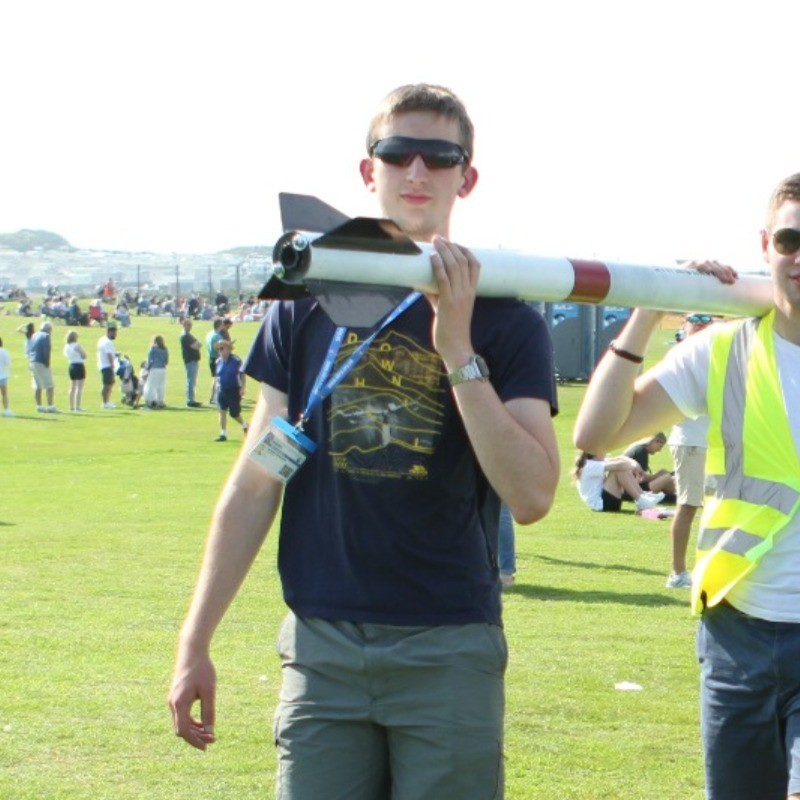
Daniel Edwards
CEO / Commercial
- President and founder of Ulster Rocketry.
- Policy advisor to the Civil Aviation Authority on sub-orbital vehicle flights.
- Vice-Captain at First and Third Trinity Boat Club.
 Sirith Space
01 / The founders
CEO / Commercial
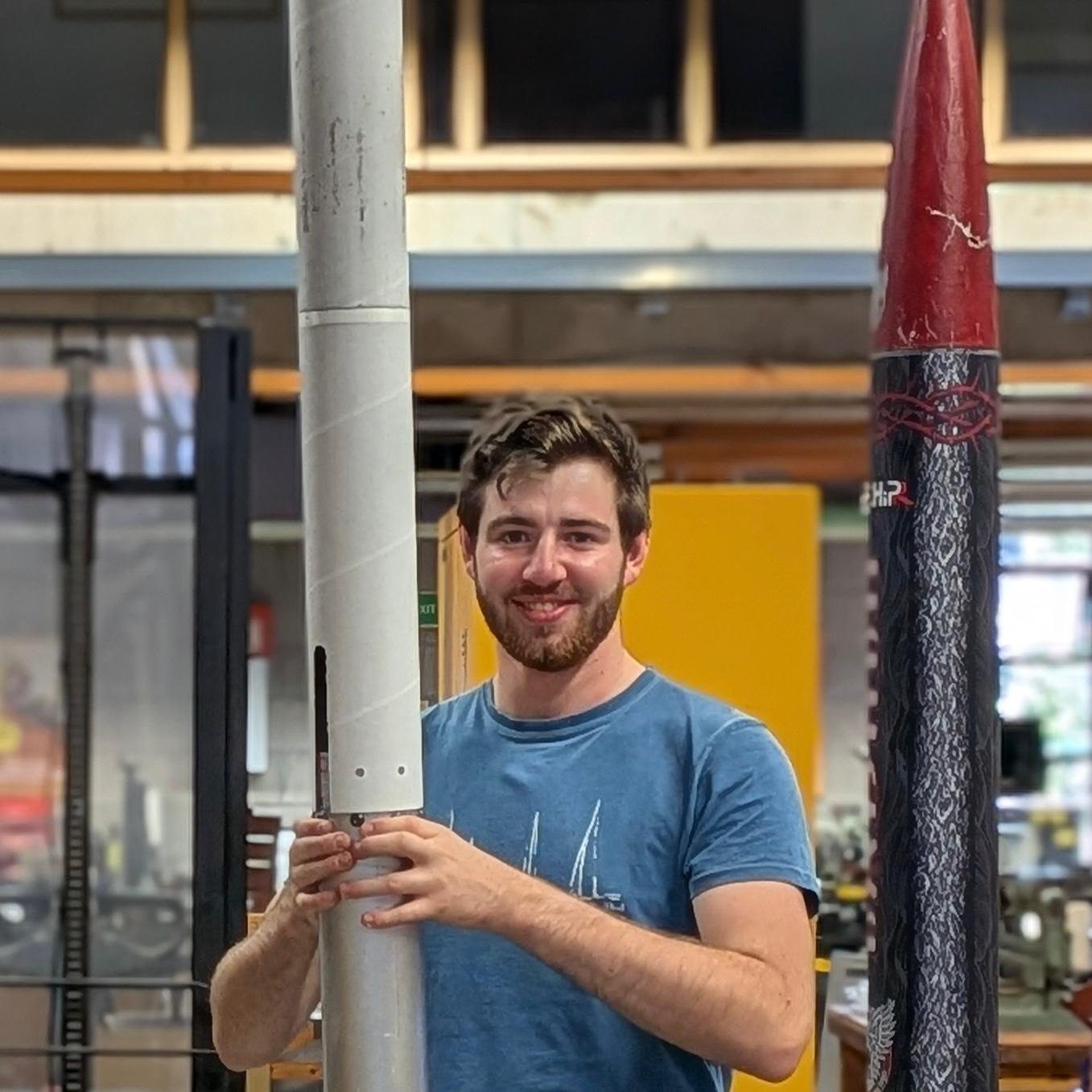
Chief Technical Officer
Ulster Rocketry: 100,000+ people introduced to rocketry and 500+ members and associated students in three years.
02 / The broken loop
Tooling, casting and curing make traditional development slow and expensive. The delay carries through the entire customer programme.
Long delivery times suppress iteration across launch, test and defence programmes.
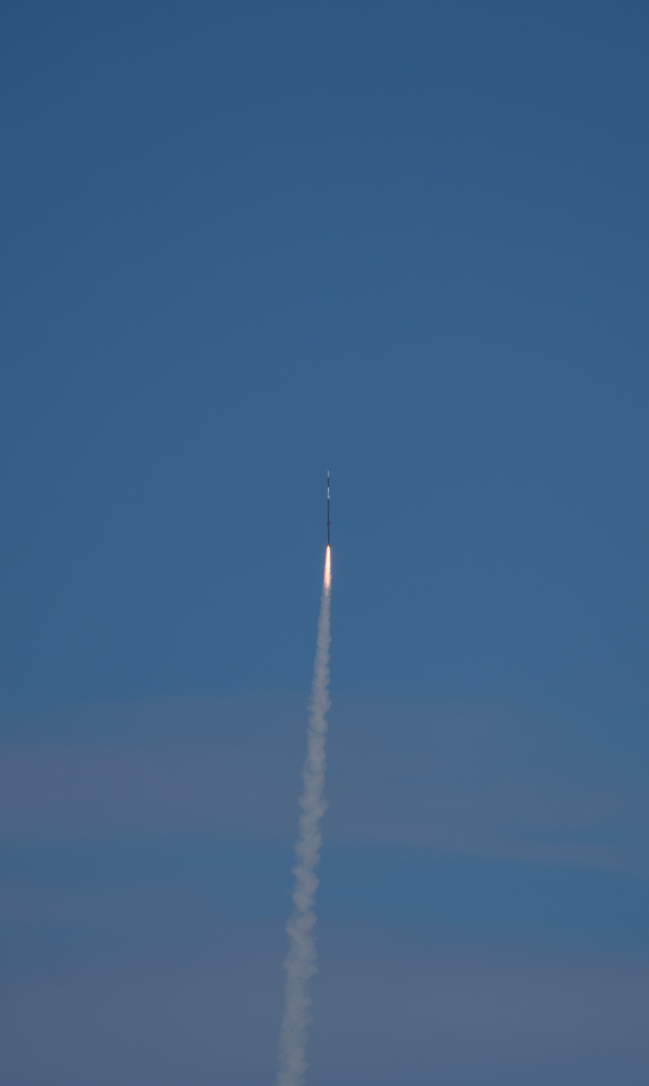
03 / The iteration advantage
To fail fast, customers need the full cycle to move faster: specification, engineering, manufacture, test and delivery.
SIRITH is building the integrated loop—not a standalone printer or another fixed motor catalogue.
04 / From profile to propulsion
Physics-constrained automated design and proprietary low-temperature 3D printing remove tooling delay while preserving 3-dimensional variable geometry.
Customer specifications and mission requirements.
Physics-constrained automated motor design.
Integrated additive manufacturing process.
Feed test data back into the next design.
Design-to-delivery target
Removing the mould build delay
Custom performance on demand
05 / Demand is accelerating
We deploy to low-volume European customers.
We scale to fulfill our LOIs
We expand to fill the void in the European and US markets.
06 / Business model + moat
Enter through development motors, scale into repeat programmes, expand through distributed production.
Custom manufacture with less dedicated tooling delay.
Each test improves prediction and the next design.
Build relationships in an industry where reliability and validation matter.
07 / Pre-seed / 2026
Fund technical development alongside site, compliance and legal preparation, so the move from demonstration to production can continue without a preventable gap.
08 / Pre-seed milestones
Technology demonstration.
09 / Use of funds
We allocate £350k to the technical programme and £250k to legal and seed preparation. Our technical programme targets TRL 4 at approximately £45k, then external validation and facilities on the path towards TRL 6.
£350,000 allocated: £300,000 milestones + £50,000 contingency.
| Milestone | Cumulative cost |
|---|---|
| 1. Hardware development | £13,000 |
| 2. Test structures | £23,500 |
| 3. Basic printing capacity established | £43,500 |
| 4. Propellant characterisation | £111,600 |
| 5. Printer ATEX compliance | £152,600 |
| 6. First external tests commence | £237,600 |
| 7. Analytical design programming commences | £242,600 |
| 8. Analytics development motors | £283,100 |
| 9. Facility ready for use | £288,100 |
| 10. Seed round expenses | £300,000 |
£250,000 allocated: £240,000 milestones + £10,000 contingency.
| Milestone | Cumulative cost |
|---|---|
| 1. RLC property agreement | £16,000 |
| 2. Planning consultant fees | £30,000 |
| 3. Site drawings | £54,000 |
| 4. Specialist compliance review | £90,000 |
| 5. Environmental consultations | £136,000 |
| 6. Application fees | £147,000 |
| 7. Application appeals counsel | £182,000 |
| 8. Planning consultant and specialist witnesses | £227,000 |
| 9. Other hearing expenses | £240,000 |
Explore the reasoning and the engineering behind the proposition.
Adapted from SIRITH-space_pitch, September 2026. Company statements, development plans, competitor periods and financial estimates are taken from that deck.