
The invitation
I hit send on the email that would change the course of the next five months of my life, and try the diminutive capabilities of us inexperienced rocketeers to the limit. As yet, the combined number of launches between the four of us could be counted on both hands. Only I had any level of certification, and the rocket we would end up flying in only 20 weeks would have more than twice the impulse of everything we had flown so far.
And it wasn’t just here that things were moving quickly. We were in the throes of legal consultations with the Police Service of Northern Ireland, trying to find a high-power launch site and build a rocket club in the North of Ireland effectively from scratch. There was no time for insanity, and yet we still had it in bucketloads.
The email was sent to the organisers of Northern Ireland’s only airshow: a brisk outline of who we were and that we were insured, a rapid request for a stall in the exhibitor area, and the danger line at the end. “If you are interested in our participation at the event in any fashion, please drop me an email at any time.”
I was in shock. I hadn’t expected this. An email from the flying director of the airshow. And it asked questions that made it pretty clear he was very much interested in having us fly: the expected altitude, required safe distances, and what level of wind we would be able to fly in.
It took me a good bit of time to realise what this meant: that we, in five short months, had to design, fly and prove a rocket suitable for use at a large public event, without room for error. I knew I couldn’t, so it was time to phone a friend. And I wasn’t even sure if, together, we could, let alone if we should.
The decision was unanimous in the end: we should go for it. We couldn’t let an opportunity like this pass. To launch a rocket in front of more than 100,000 people wasn’t something likely to be offered to us again if we turned it down.
We were an odd bunch: all of us university students, and all deeply embattled in getting a rocketry club going in Northern Ireland. It had all started in September 2022, when we returned for our last year of school and decided to attempt the UK Youth Rocketry Challenge. That year, it was to fly an egg to 750 feet and return it safely to earth using a commercial off-the-shelf motor under 80 newton-seconds. The less said about that the better. At our first test launch, I had forgotten to attach the parachute, and at the actual event our rocket decided it wanted to be a terrain-following anti-ship missile…
We’d only built one rocket together since then. None of us had really been happy with our performance, and we knew we could do it better, much better. So we finished the job over the summer, building and eventually flying a rocket that actually worked and achieved all the parts of the mission plan.
There were four of us, each absolutely essential to the team. Donald, the only one who possessed any of that uncommon attribute often called common sense, a misnomer to the extreme! Dylan, our CAD genius and the person who can do anything you throw at him. David, our electronics wizard, capable of functioning on absurdly small quantities of sleep. And finally me, who really can’t function on less than eight hours’ sleep and consequently tends to do something very stupid at every launch I go to, particularly when none of the others are around…
And so it was on. We needed to create a rocket that looked the part for launching in public, so big was beautiful. It wanted to be pretty heavy, as there isn’t much point having the entire crowd gazing up into the blue with no idea where it went. Recovery would be by splashdown, so it needed to be buoyant and waterproof. These were things we hadn’t tried before, things we had no idea how we were going to do.
The design
April–June 2024
I wish I could take you to some of those design meetings. They were in depth, to say the least, and not just in the rocket design, but also in how we would make this worth watching. We spent more than half an hour working out which rocket propellant to use, and that was after we knew it would be Cesaroni Pro38, because of the casings we had, and would be either White Thunder, Smoky Sam or Sparky.
And just to make life that little bit more difficult, we decided that, to be certain it would come down in the ocean as planned, we needed to use dual deployment for the first time.
Hence, electronics. I had no idea about electronics. To be honest, I still have no idea. They’re like quantum mechanics: when David uses them, they are observed to be functioning, but as soon as I interact with them in any way, they are observed not to be functioning… And hence the only words of wisdom I can give you on that regard are, “Cool, but don’t use unless necessary!”
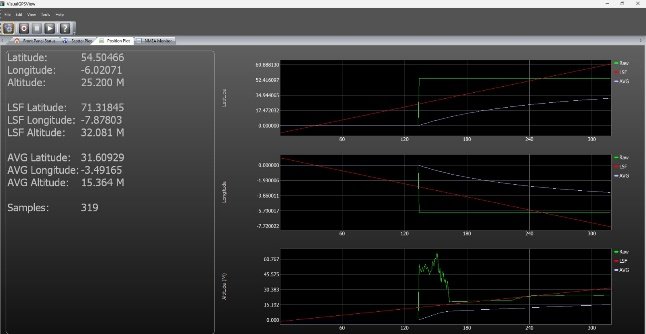
Then came the final part of the design we found particularly difficult: making it safe for a splashdown. For most of a rocket this is relatively easy; only the electronics need protecting. But when the air needs to flow freely, because the altimeter we were using is barometric, life gets a little more complex. You can’t just seal every entrance and exit to the avionics bay!
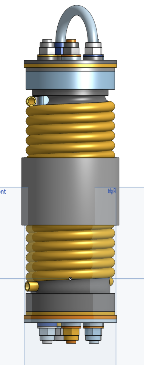
So we decided to use surface tension to our advantage, forcing water to flow as in a straw and providing a long enough coil to ensure water did not flow through until the avionics bay was almost two metres underwater. This allowed free flow before splashdown, although we did observe some lag in pressure equalisation, with the avionics compartment effectively sealed after splashdown.
The build
It would definitely never be the case that someone would try to build a rocket in under 72 hours. That would be unbelievably stupid and would obviously result in failure.
I’m unbelievably stupid. At this point I had gone so far as to cut out the fins, but I hadn’t even fully sanded the carbon so it was the same size, put the chamfers on the leading edges, had the fibreglass body tube delivered, or…
I have the great advantage that, as a student, I can spend a lot more time on this kind of thing than most. Even then, farm work and a very busy church Vacation Bible Club meant most of the work I did happened after six in the evening. I have to give a massive thank-you to the rest of the team as well. They came after internships to spend most of those nights working, then did it all again on seriously small quantities of sleep.
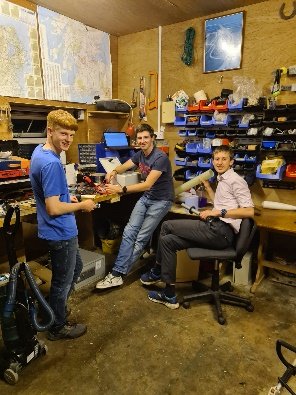
So we launched full tilt into the wildest build of my life. The first night we cut the fins, chamfered the edges and cut the centring rings. I tested those the next morning, and on Thursday evening we JB Welded them in. We tend to use JB Weld for literally everything over here, given the difficulty of finding dedicated rocketry epoxies, and it’s never failed me or anyone I know yet. By about three in the morning I had managed to get two of the fins stuck on, and set my alarm to do the next in the morning.
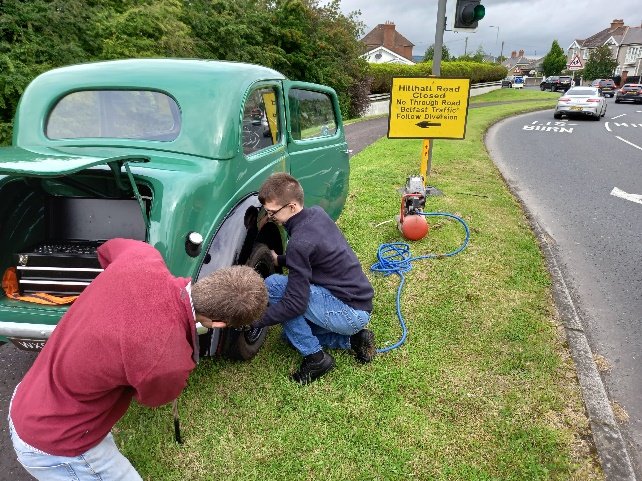
It wasn’t to be. I spent the early part of the next morning trying to change the tyre on my brother’s 1948 Morris 8. So yes, it’s not just me in my family who’s crazy. We were going into the evening when we needed to complete integration and testing without a rocket even built.
I finalised the recovery system that lunchtime, and prepared myself for the onslaught to come.
Four fins on? Functioning flight computer? Quantities of black powder correct? Somehow, for each of these questions, the answer was yes. We completed our ejection tests at a time of night that should have had the police called on us, and all was well with the world. Just one small coat of paint to buff out the build marks and all would be complete. Or not quite, but still flyable in good conditions.
I don’t know how intuition can instantly tell disaster. But mine did. The thump from outside wasn’t great, but in normal circumstances would barely have been noticed. This time there were two fins broken off the rocket as it lay on its side. Don’t try to paint your rocket on its end!
In hindsight, we should have given up. The first Northern Ireland club launch, which I was also running on the side, began in fewer hours than a respectable man should have sleep. But I was too tired to think straight, too high on the fumes of epoxy to realise, too stubborn to admit defeat. So, after one McDonald’s trip, I brought it back in and set to the thankless task of once again returning each fin, clamping them in place and leaving them to dry until morning.
And it was then I made the final mistake. I gave the avionics bay a quick spray of paint to make it more easily visible, and went to bed just after 04:30.
Launch day
Somehow, despite me, the epoxy was kind of dry and we were starting the first ever Ulster Rocketry launch. Yeah, none of this was official. And I was woefully unorganised. And I had literally no idea what I was meant to be doing. And I was the person running it. But it was legendary, and the atmosphere was electric.
There were so many new things going on that I can’t describe how fortunate we were to launch anything at all. We had built, or borrowed from unlikely sources, literally everything you need to run a launch. We built our own launch box on the side at the same time as this, soldered together radio tracking kit, and even had to find our own launch rails. Massive thanks to Colin, the prefect of Tripoli Ireland, for driving for six hours just to lend us a launch rail when the one we had ordered was delayed by four weeks.
Sometimes, when something is about to go seriously wrong, something happens to tell you not to go ahead. I was launching one other rocket that day, a well-flown Level 1 rocket I’d used for my L1 certification. I didn’t properly check that I’d screwed in the nozzle, so as soon as the motor built up pressure, the nozzle blew out. She never even left the rail. Probably just as well.
I suppose it’s one of those things you need to chalk up to experience and just say, never do that again. But I’m kind of still annoyed that I missed the fact the nozzle wasn’t screwed in fully.
Triton was ready to go. Flying on a Pro38 543I297, we were greatly encouraged by Colin not only telling everyone it was a heads-up flight, but also telling people not to run if the rocket failed on the launch pad…
There’s something unbelievably nerve-racking about launching one of your own rockets. But I have to admit this was way worse. Not only could I lose my own hectic work over the past couple of weeks, but our first foray into electronic deployment could see £200 of investment and four weeks of work destroyed if things went wrong.
I have to say that launch was one of the most spectacular I’ve ever seen. Everything worked great until apogee.
And then it didn’t. I saw it nose over, the puff of smoke from deployment, and then no parachute.
I saw a second small puff of smoke as Triton disappeared into the tree line. This time I heard it as well, but even had it worked, I knew there was no chance of success with the rocket 50 metres off the ground and already going at more than 300 mph straight down.
We dug the shattered fibreglass tube out of the ground, picked up the stripped fins and made the long trek back to the car. The drogue was ripped apart. Flight-data analysis discovered that it did momentarily slow the rocket, but then disintegrated about three seconds after deployment. The main had never deployed; it lay, still furled, on the ground.
The lessons
An hour’s drive home is actually a surprisingly good debrief session. We had a short list of learning points compiled by the end of that drive, each one obvious to some extent in hindsight, but things we rookies had never thought of.
- We ejected the drogue from the nose cone, meaning the rocket remained stable despite ejection on the way down.
- We assumed a parachute for mid-powered rockets would also function as a drogue for high-powered rockets. Never assume, always test! Even if it has a clear spec sheet…
- And the prize mistake that I can still only wonder at: why did I think, even at half three in the morning, that it was a good idea to give the avionics bay a coat of paint after we had finished ejection testing? That one had me questioning my right to ever touch rocket fuel again for at least two weeks…
I’m sometimes not sure if it failed because of a bout of launch fever. I actually think we were pretty free from it on the day. But the launch fever had definitely struck the night before, and that was when I made two of the three mistakes that resulted in a failed flight. In the end, it has to be counted as that, even if we didn’t actually have it on the day.
With thanks
To Roger; Kim and the staff at Portrush; John from Shannonvale; Colin and Irish Rocketry; Roy from Bishopscourt; the PSNI explosives team; and my amazing team.