
The rebuild
We took nearly a week to review everything from the flight and begin to redesign the parts we had realised were flawed: our methods of motor mounting, our fin attachments, and even our failure to reinforce the nose cone with a foam filling.
I really can’t thank our incredible sponsors at Shannonvale Fibre Tubes enough for their support here. We were running on the edge of possible timelines from here until the launch. Their ability to manufacture a new fibreglass tube for us and have it delivered in less than a week was the only reason we were able to stay on track.
So we got back to work. Once more aligning fins, just a little straighter. Once more epoxying centring rings, just a little more cleanly. And once more securing parachute attachments with enough strength to hang a truck off…
This was the earliest night of the entire week before the launch.
But also one of the most satisfying. We finally had a clear pathway to the launch. Just to work out how to waterproof everything and make sure our electronics didn’t get wet.
Oh, and successfully test ejection. How hard could it be?
Expanding foam is always a great friend, particularly when you’re trying to create something that floats. We filled the nose cone with foam so it would float, and pulled apart a lifejacket to provide the rest of the necessary flotation, to deploy along with the main chutes.
It was there that I realised I had made my only big design mistake, although the build ones were numerous. When I designed the avionics bay, I had forgotten that things like U-bolts and charge caps take up space. We’ll simply describe the fully loaded rocket as very well packed, so much so that we had to carry it everywhere with tape around the nose cone to stop it popping off!
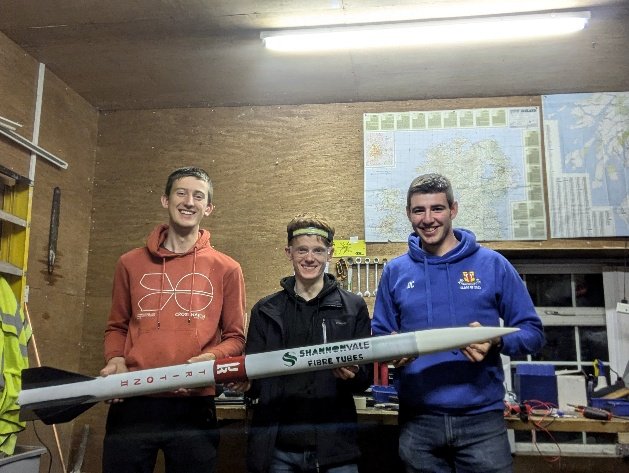
The final tests
We were finally ready for our last run of ejection testing. The avionics bay was complete, the paint had dried, just about, and while others slept we were going to finish the last steps of the rocket.
After the launch fever of the 10th had cost us all our work to that point, we had decided we would have to scrub the launch if we were not ready 24 hours in advance. We really couldn’t afford a failure in front of a crowd of thousands.
And it barely even moved. Several ejection tests later, we worked out that moving the heavier parts of our rocket apart required much more than the online calculators had suggested. It demonstrated how important it was to test, and test again.
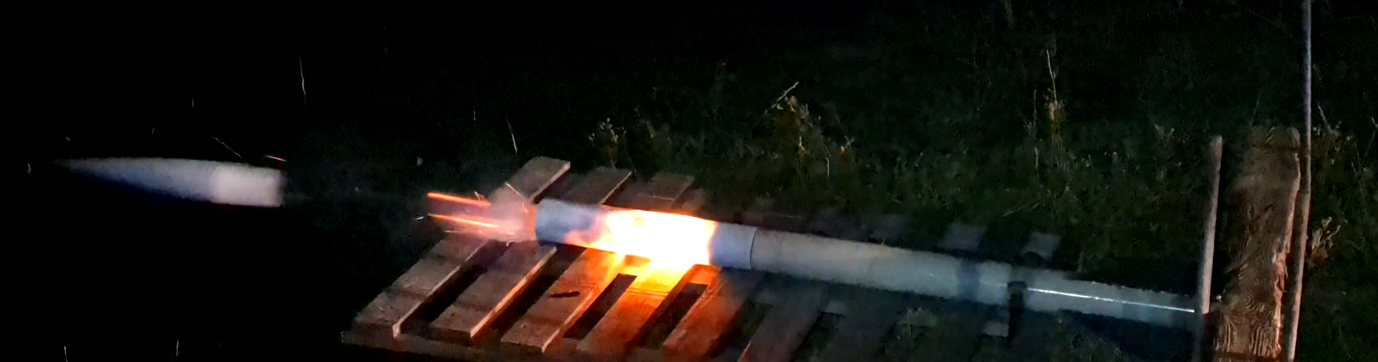
Another note for all those budding videographers: the ejection charge looks really cool at three o’clock in the morning.
But we were finished. Ready to launch in front of a crowd of thousands.
Trying to remember everything you could possibly need to launch is always one of those things. You start with a clearly defined list of all you need, and finish by packing as much of your garage as can possibly fit into the car…
For us, that was pretty much every single thing we’d ever bought for rocketry, given we had a couple of pretty big cars heading up! Definitely an advantage on the day, but we did end up running late because we brought things we didn’t need before our essential kit.
Airshow day
We met at a motorway car park bright and early, and we were on the way to launch day!
There were three main stages to the day: talking to people at the STEM marquee stall, preparing for the launch, and finally the launch and recovery.
It was the quintessential day at the beach. Incredible sunshine, and barely any wind even on the clifftops. When we consider the average Northern Ireland September weather, that’s even more exceptional. Of all the airshows I’ve been to, this had the best weather, so we were very fortunate!
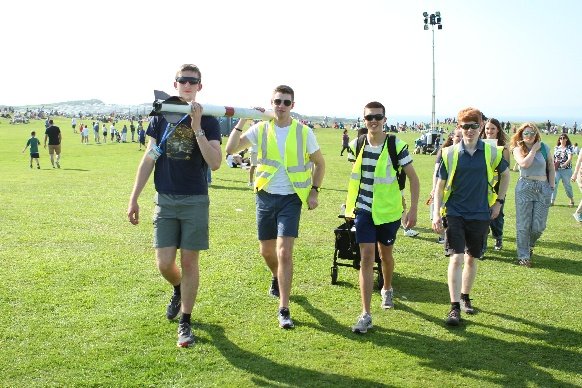
The first few hours were quite busy and very enjoyable. We chatted to many people to encourage them to get involved in rocketry, and learnt more about the history of Shorts Missile Systems. After a brief pause to watch the Typhoon display, can’t miss that, we were flat out on our preparation…
It was here that we made the only mistake of the day: we brought the boxes in the wrong order! We were almost 15 minutes behind schedule within minutes of starting, as we couldn’t prepare the separation charges for the Quasar when planned.
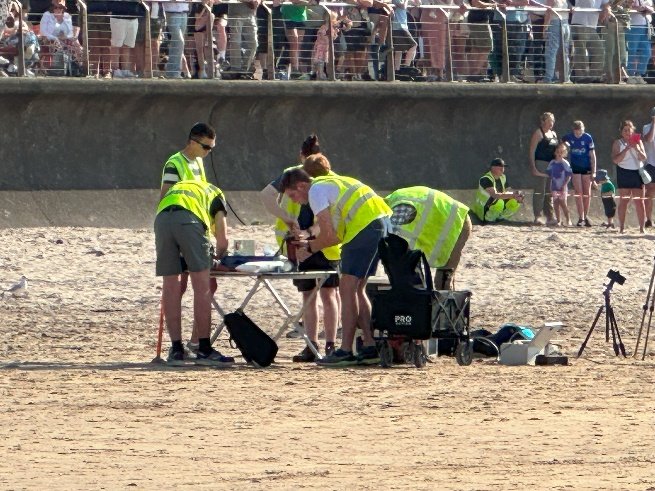
Charge caps prepared, we placed the rocket on the launch rail. With less than a minute left in our launch window, we got to press “the big red button!”
Flight and recovery
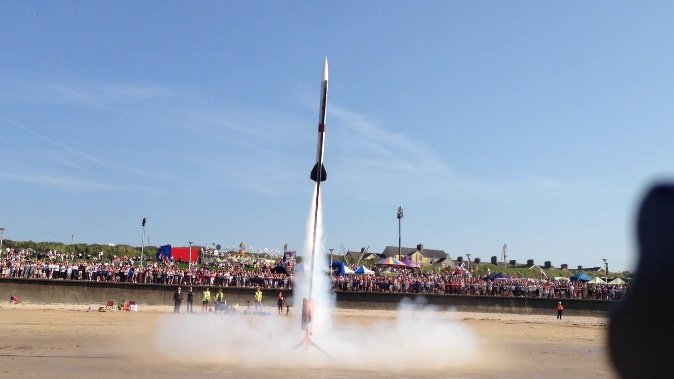
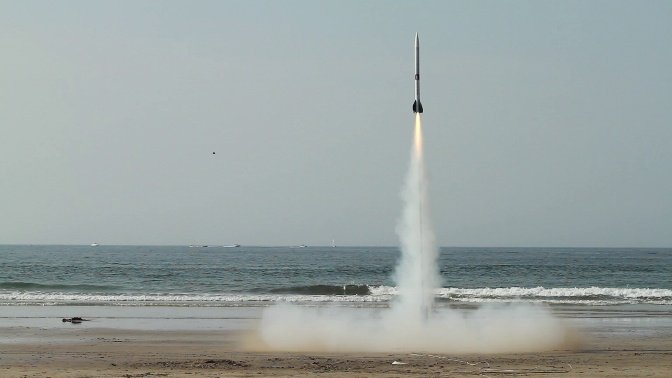
Everything about the flight was as textbook as it is possible to get. Every deployment went as planned. The rocket motor slightly overperformed, giving us around 20 metres of extra altitude: simulations predicted 604 metres, and we achieved 623 metres. Our two deployment events were exactly as planned, the lifejacket inflated on contact with the water, and our avionics worked perfectly.
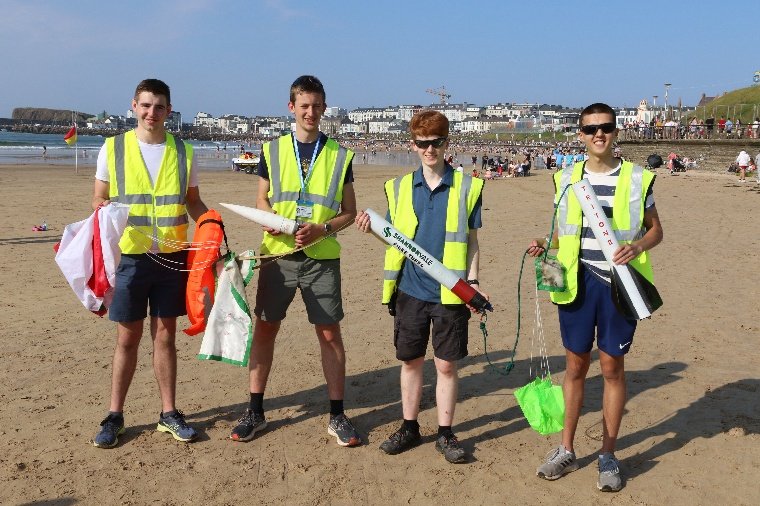
Many thanks to the Portrush Harbourmaster, who recovered the rocket from the sea for us!
Looking ahead
At the time, our plans were for a full roster of airshow launches across the UK, increasing our launch cadence, and a trip to BALLS. We were also designing a new rocket, using what we’d learnt from Triton II to make a bigger and better display for the coming years.
Further ahead, Ulster Rocketry Dev Ops was exploring a US airshow tour for 2026 or 2027: another chance to bring this kind of display to new audiences and work with local clubs.
With thanks
Looking back, we couldn’t have done it without the help of so many people. Colin from Tripoli Ireland gave us plenty of advice about how to make things work. The staff at the PSNI explosives office gave us advice along the way and kept us on the legal path. The staff at Portrush council and R5 Air Displays bore with our inexperience so we could deliver on the day.
Most of all, thanks to our incredible sponsors at Shannonvale Fibre Tubes, who made the fibreglass and carbon fibre to the specifications we needed.